You don’t need more information. You need a system. Most people quit long courses because the commitment crumbles. Microlearning, tiny daily actions, just works better. It builds momentum. This list looks at apps that structure progress into short, repeatable formats. Think of them as daily tools, not content libraries.
Each one suits a different style. Some give you a strict path. Others offer inspiration. Your job is to pick the format you won’t abandon next Tuesday.
What Actually Makes a Microlearning App Effective
It’s not about having lessons. It’s about the container they come in. A good app forces a rhythm you’ll actually keep. It bridges the gap between knowing something and doing it, daily. The design should nudge you toward practice, not just consumption. The difference is in the engineering. Look for these traits:
- Short lessons that fit daily routines;
- Clear structure or guided learning paths;
- Elements that encourage real-world practice;
- Expert-backed or curated knowledge;
- Designed for long-term consistency.
No single app does everything perfectly. The best one fits your specific gap between intention and action. That’s the whole game.
RiseGuide
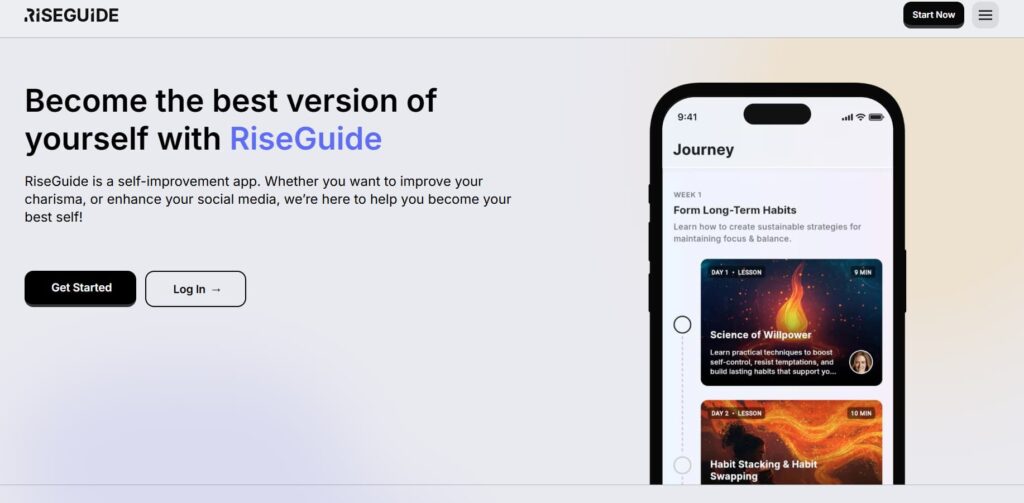
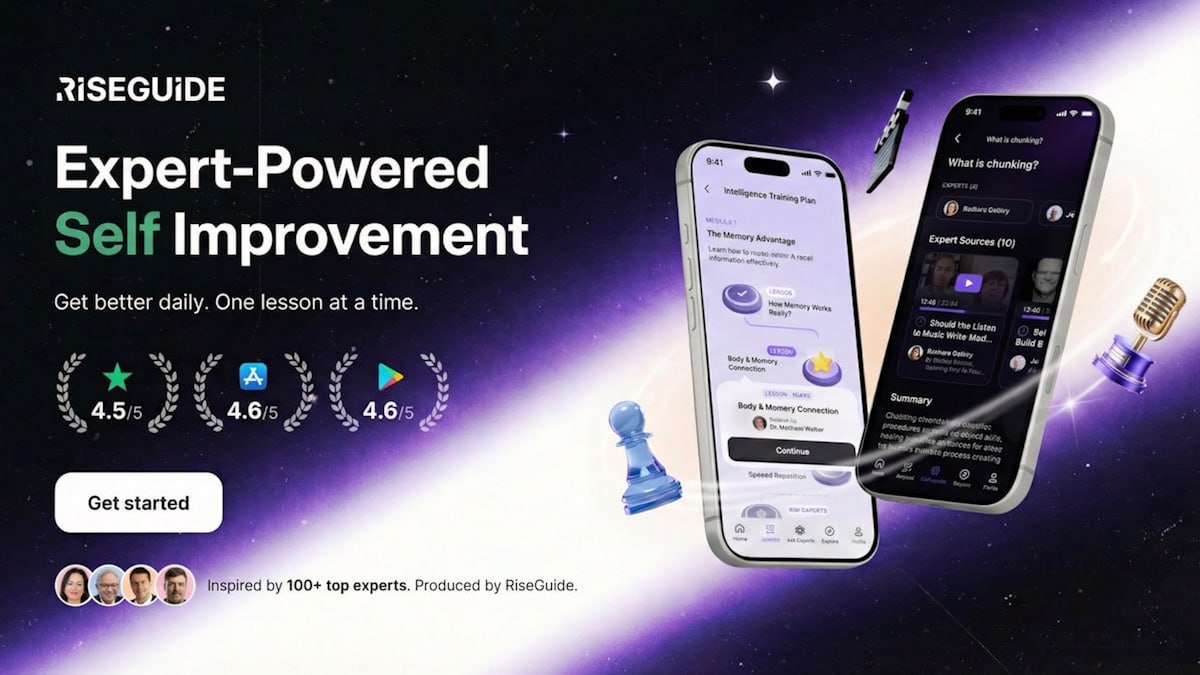
RiseGuide is built like a system for skill development through daily practice. It treats self-improvement as a practical discipline, not a topic for study. The app delivers structured, bite-sized lessons every day, organized into focused paths like communication or confidence building. It’s less about watching and more about doing, with interactive elements woven in.
Why It Works for Daily Skill Building
The architecture is designed for habit formation. You get a new, manageable chunk of learning daily, preventing overload. These lessons are powered by practical frameworks from experts, not just motivational talk. Its unique SEEK feature acts like a search engine for expert insights, which is clutch when you need a specific answer fast. The interactive tools, from templates to exercises, convert theory into a small action. The wide Explore section lets you roam if you want. The key features are straightforward:
- Daily bite-sized structured lessons;
- Expert-powered practical frameworks;
- SEEK search for expert insights;
- Interactive tools that support action;
- Wide topic selection in Explore.
It’s a solid pick if you crave daily structure without thinking. But to be honest, your progress depends entirely on your regularity. The system guides, but you execute. And not every pre-built lesson will feel perfectly tailored to your exact Tuesday mood. That’s normal for any structured program.
MasterClass
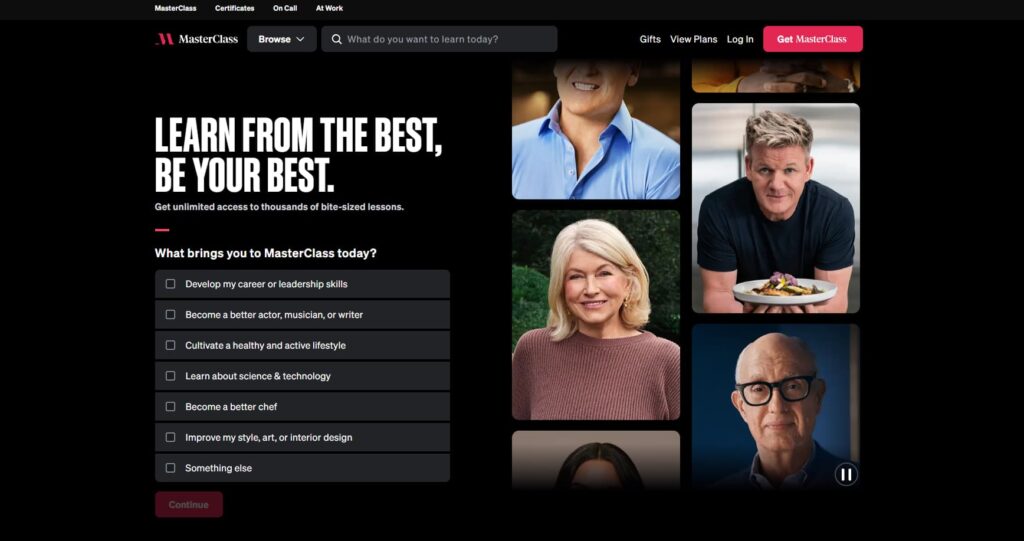
MasterClass is about inspiration through pedigree. It offers cinematic video lessons from world-renowned figures. You’re learning about mastery from people who actually have it. The production quality is high, and the perspectives are unique. It’s a library of excellence, but the learning format is fundamentally watch-and-learn.
Where It Fits Best
This platform is for a specific learner. It suits those who are motivated by narrative and high-quality storytelling. The value is in exposure to top-tier thinking and creative processes. The topics range widely from cooking to negotiation to filmmaking, offering breadth. It’s flexible, on-demand viewing. MasterClass works when your primary need is perspective, not drill. Consider it for:
- Learning from world-class performers;
- High-production cinematic video lessons;
- Broad topics beyond skill training;
- Flexible, watch-at-your-own-pace format;
- Strong for inspiration and perspective.
The platform excels at content consumption. Turning those insights into a daily practice, however, is a task it leaves completely up to you. There’s no built-in habit tracker or practice loop. You get the lecture, not the gym.
Mindvalley
Mindvalley operates as a platform for deeper personal growth programs. These are called Quests. They often blend skill development with wellness and mindset themes. The approach is more immersive, with a community aspect that provides a sense of shared journey. It’s for a transformational experience, not a quick tip.
Where It Fits Best
This is for committed exploration. Each program is a guided learning journey that unfolds over weeks, with daily tasks that are often longer than micro-sessions. The community and live events add a layer of accountability you can’t get from a static app. The focus leans heavily into holistic development. Think mindset, spirituality, health. It fits if you want:
- Program-based guided learning journeys;
- Community and routine-driven experiences;
- Strong focus on mindset and wellness;
- Longer, immersive learning sessions;
- Broad personal development themes.
The format is intensive. It’s less suited for someone seeking a pure, three-minute daily micro-habit. You’re signing up for a deeper dive that demands more time and mental space per sitting.
Studio
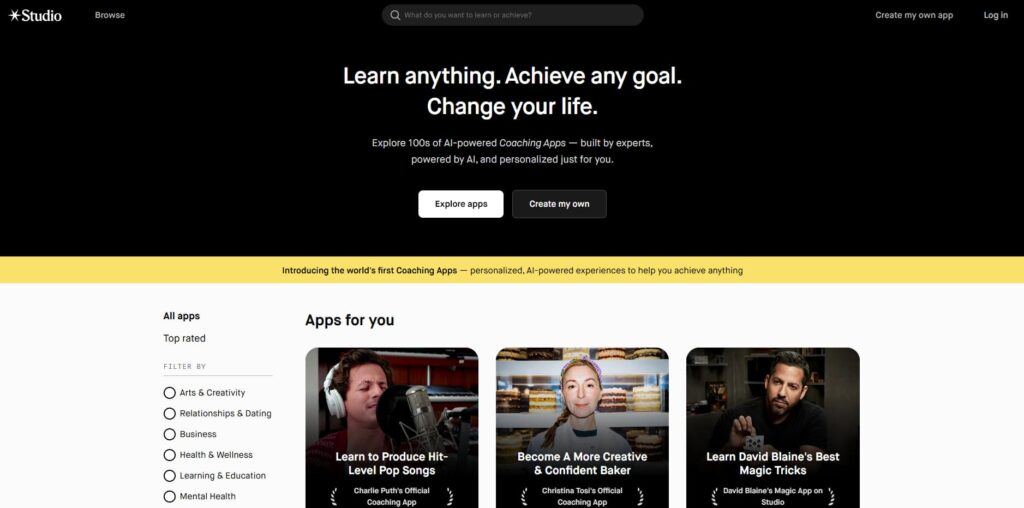
Studio takes a goal-oriented, coaching-style approach. You start by defining an objective, and the app builds a structured plan to reach it. It blends lessons with habit tracking and progress monitoring. The feeling is like having a digital coach that lays out your weekly tasks and checks your completion. It’s big on structure and accountability.
Where It Fits Best
This app shines when you have a concrete, specific target. Whether it’s improving fitness, learning a language, or building a productivity system, Studio creates a tailored path. The daily check-ins and visual progress tracking provide clear feedback. It eliminates the “what should I do today” question. It’s built for the person who wants a prescribed routine. Its strengths include:
- Goal-driven structured development plans;
- Habit tracking and accountability tools;
- Personalized routine-building approach;
- Clear progress and milestone tracking;
- Coaching-style guided development.
It’s highly effective for focused goal achievement. But that focus is a trade-off. The app is less convenient for free exploration of random topics outside your active plan. It’s a specialist, not a general store.
Blinkist
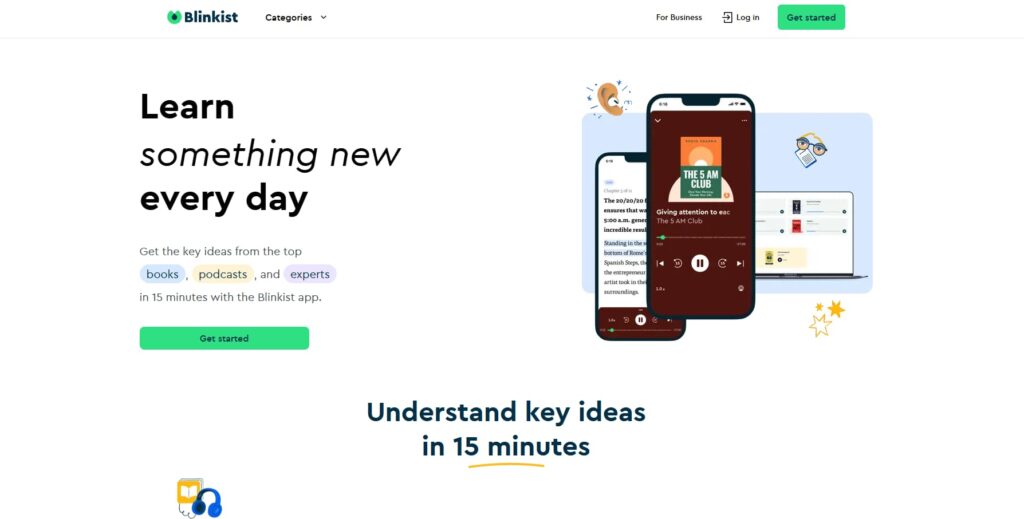
Blinkist specializes in condensing non-fiction books into short summaries called Blinks. You get the key ideas from a book in about 15 minutes, in text or audio. It’s a tool for efficient knowledge acquisition, for learning what’s in a book without reading all 300 pages. It’s about concepts, not practice.
Where It Fits Best
Use this when you need to learn ideas fast. It’s perfect for busy people who want to stay informed or preview books before a full read. The audio format makes it easy to learn during a commute or walk. The range of topics is vast, from psychology to business to history. It’s a powerhouse for efficient consumption. It fits if your need is:
- Quick summaries of non-fiction books;
- Learning key ideas in short sessions;
- Audio and text for flexible use;
- Broad range of knowledge topics;
- Efficient learning during busy days.
It’s brilliant for grasping ideas. But that’s its limit. The app provides zero system for turning those ideas into daily skill practice or habit formation. It’s a lecture hall, not a training ground.
Imprint
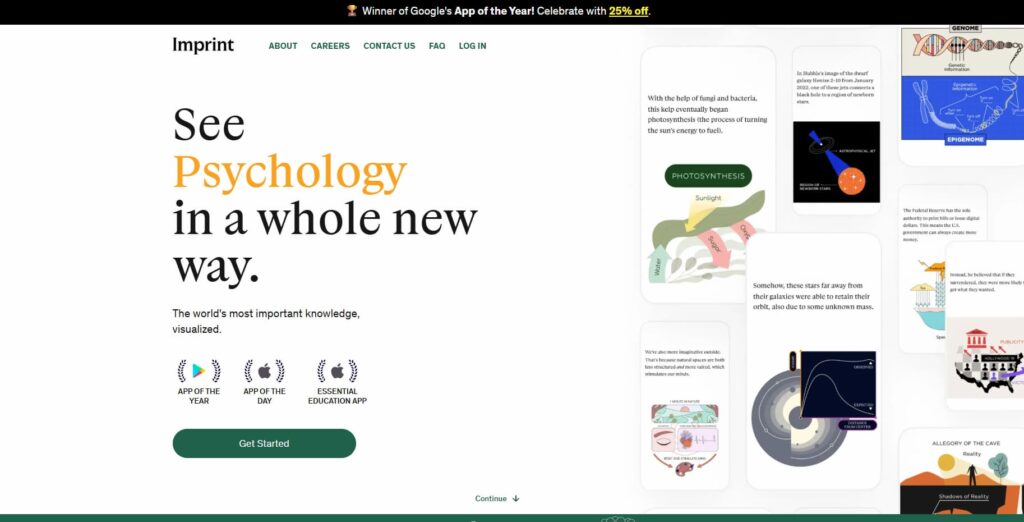
Imprint focuses on visual explanations of complex ideas. It takes concepts from books, economics, or science and breaks them into beautiful, easy-to-understand visual cards. The goal is comprehension and memory retention through design. It makes learning feel swift and almost effortless.
Where It Fits Best
This service is your go-to for quick, visual understanding. It’s ideal for visual learners who struggle with dense text. Use it to quickly grasp the fundamentals of a new topic or to refresh your memory on something you studied before. The sessions are short and the format is sticky, helping ideas actually lodge in your brain. Consider Imprint for:
- Visual learning for complex ideas;
- Fast grasp of core concepts;
- Short, easy-to-digest sessions;
- Designed for strong memory retention;
- Good for knowledge refresh.
It’s incredibly useful for building mental models and understanding. But it does not provide, and isn’t designed for, systematic daily practice of a soft skill. You walk away knowing, not doing.
Conclusion
Different apps serve different masters. The right choice is a function of your goal and your honesty about daily effort. If your target is building habits and concrete skills, you need structure and repeatability, the kind Riseguide or Studio provide. If you’re after ideas and inspiration, Blinkist or MasterClass make sense. Mindvalley offers depth for holistic growth. Honestly, just pick the format you’ll actually open. A two-minute daily habit in the right app beats a two-hour monthly binge in the “perfect” one, every single time. Start with that.